

Equipment and machines for hazardous areas – Avoid potential ignition hazards
Ignition sources for combustible dusts can be caused by both electrical and non-electrical equipment.
The maximum temperature of surfaces on which dust may be accumulated or which may come into contact with dust cloud must be kept below the defined temperature limit. For the max. permissible surface temperature of the equipment , the smallest value calculated from the minimum ignition temperature of the dust layer (T5 mm: Tmax. < T5 mm – 75 °C) and the minimum ignition temperature of the dust cloud (TCL: Tmax. < 2/3 TCL) is used.
In addition to the ignition temperature, the conductivity of the dust is a key parameter and a selection criterion for appliances. Equipment group IIIC applies for use with conductive dusts and equipment group IIIB for non-conductive dusts.
With the principle of dust-tightness or protection by enclosure (Ex t, IEC 60079-31), any sparks are enclosed by an enclosure. The ingression of a surrounding dust atmosphere into the enclosure is permanently prevented by a high degree of dust protection (e.g. IP 6X for conductive dusts). This principle can be used for both electrical and non-electrical equipment and machines and is suitable for all levels of equipment protection.
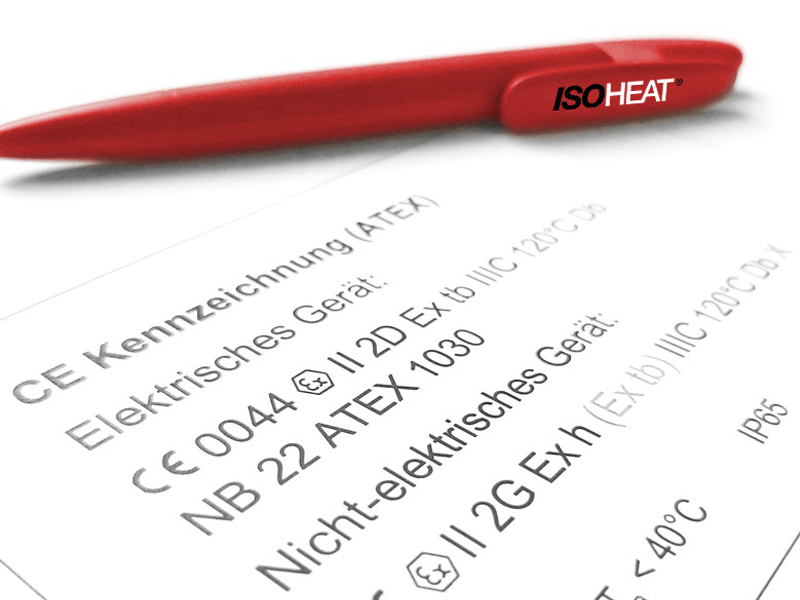
The ignition protection measures and the suitability of the equipment or machine in the DustEx area can be recognised by the comprehensive marking on the nameplate.
Any questions? We will assist you promptly.
Sign up for our Newsletter now: